

Gold exploration depends on reliable core samples. During diamond core drilling, the drilling fluid must help carry cuttings out of the borehole while remaining suitable for the ground conditions and drilling equipment. When a project moves through loose overburden, fractured rock or changing formations, the fluid may need adjustment rather than a single fixed recipe.
Bentonite, dispersants and PAC R can each play a role in a water-based drilling fluid. The key is to understand what problem each material is intended to solve, then test the complete system under the project's conditions.
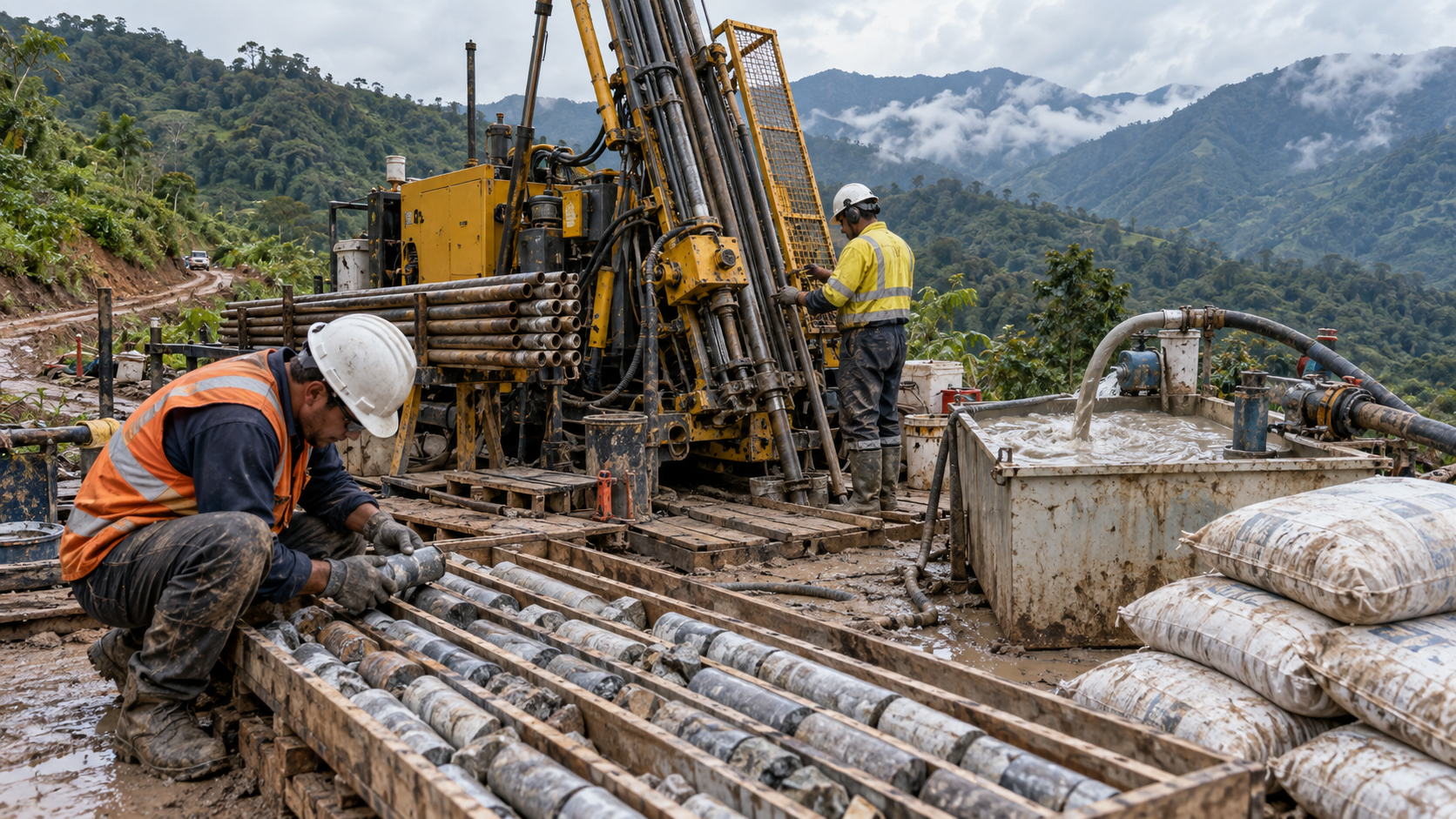
Start with the Problem the Fluid Must Solve
A diamond core drilling fluid is part of a working system, not a standalone product. It has to support circulation and cuttings transport while remaining pumpable. Depending on the formation, it may also need to help with borehole stability and filtration control.
The balance can change as depth, rock type, groundwater chemistry and solids loading change. For gold exploration, where core recovery and sample quality matter, a fluid that is poorly matched to the ground can create avoidable operational problems. The objective is not maximum viscosity. It is a controllable fluid that remains suitable for the borehole and the drilling method.
A useful starting point is to define the main issue: cuttings transport, borehole instability, excessive viscosity, filtration loss or changing performance after drilled solids enter the system. Each problem may call for a different response.
What Bentonite Does in Diamond Core Drilling
When properly hydrated in suitable water, drilling-grade bentonite develops viscosity and suspension properties. It can help transport drilled solids and support borehole stability, particularly where the formation is loose or unstable.
Hydration quality depends on the bentonite grade, water chemistry, mixing procedure and time. A product that develops useful properties in one water supply may behave differently in another. This is why a representative mixing-water sample should be part of the evaluation.
More bentonite is not automatically better
Excess solids or viscosity can make circulation and solids removal harder to manage. Increasing bentonite without checking the resulting fluid properties can reduce pumpability or create a fluid that is difficult to condition.
Bentonite selection and concentration should therefore reflect the formation, water quality, drilling method and the fluid properties observed on site. A drilling-grade bentonite should be evaluated as part of the complete fluid, not in isolation.
| Component | Main role in the fluid system | What to confirm |
|---|---|---|
| Bentonite | Develops viscosity and suspension properties after hydration; can help transport drilled solids and support borehole stability. | Hydration in the available water, concentration, viscosity development and response to the formation being drilled. |
| Dispersant or thinner | May help control excessive viscosity or gel strength when fine solids accumulate. | Compatibility with the bentonite, PAC R and site water, plus the measured response after addition. |
| PAC R | Regular-viscosity polyanionic cellulose used in water-based fluids; can help control filtration and may contribute to viscosity. | Required filtration and rheology, grade or product data, addition level and interaction with the rest of the system. |
Where a Dispersant Fits
As drilling progresses, fine solids can accumulate and the fluid may become too thick or develop excessive gel strength. A suitable dispersant or thinner may help control those properties.
However, "RD dispersant" alone does not define a universal chemical formulation. Before recommending a specific product or treatment level, the supplier and drilling team should confirm its technical data and test its compatibility with the bentonite, PAC R and site water.
A dispersant should be used to correct a measured problem. If it weakens another required function or changes the fluid balance in an unexpected way, the complete system should be reviewed rather than increasing the dosage repeatedly.
What PAC R Contributes
PAC R is a regular-viscosity grade of polyanionic cellulose commonly used in water-based drilling fluids. Depending on the product and formulation, it can help control filtration while also contributing to viscosity.
It should be evaluated as part of the whole fluid system. The appropriate amount depends on the required filtration and rheology, as well as the water and formation conditions. Adding PAC R without checking the resulting fluid properties may produce a different balance from the one the drilling team needs.
PAC R and bentonite should not be treated as interchangeable additions. Their functions overlap in some areas, but the selection should be based on the properties the fluid needs to achieve.
How to Plan a Practical Trial
For a new gold exploration project, a small trial should answer specific questions before the fluid is scaled up:
- Does the bentonite hydrate and develop useful properties in the available mixing water?
- Can the fluid carry cuttings while remaining easy to pump and circulate?
- Is filtration control adequate for the formation?
- If a dispersant is used, does it correct excessive viscosity or gel strength without weakening the fluid's other functions?
- How do the fluid properties change after drilled solids enter the system?
A useful trial compares the starting fluid with the treated fluid and records the mixing procedure, additions and test results. Feedback from the drilling team can then guide the next formulation or a larger supply order.
| Trial record | Why it matters |
|---|---|
| Mixing water source and treatment | Water chemistry can affect bentonite hydration and the response to other additives. |
| Bentonite grade, addition level and hydration time | These factors influence viscosity development and suspension behavior. |
| PAC R grade and addition level | Filtration control and viscosity contributions depend on the selected product and formulation. |
| Dispersant type and addition level | The result should be compared with the measured problem and the rest of the fluid system. |
| Properties before and after solids contamination | Performance can change once drilled solids enter the fluid. |
Build the Fluid from Borehole Conditions
There is no single bentonite-and-polymer recipe for every gold exploration borehole. Loose ground, fractured zones, groundwater chemistry and drilling practices can create different demands.
Starting with a representative material sample and a clear test plan gives both the supplier and the drilling team a better basis for selecting additives. The evaluation should focus on the actual borehole conditions and on the fluid properties that need to be maintained during drilling.
HERMANO NEW MATERIALS supplies bentonite for drilling applications. If you are evaluating materials for diamond core drilling, share your formation conditions, mixing-water information and current fluid performance with us. We can discuss a suitable bentonite sample and the technical information needed for your trial through our contact page.
Frequently Asked Questions
What is a diamond core drilling fluid used for?
A diamond core drilling fluid supports the drilling operation by helping to carry cuttings out of the borehole and by remaining suitable for the ground conditions and equipment. Depending on the project, the fluid may also need to support borehole stability and filtration control. The required balance should be confirmed for the actual formation, water quality and drilling method.
Why is bentonite used in diamond core drilling?
When properly hydrated in suitable water, drilling-grade bentonite develops viscosity and suspension properties. It can help transport drilled solids and support borehole stability, particularly where the formation is loose or unstable. Its performance depends on the selected grade, water quality, mixing procedure and concentration.
Does more bentonite always make the drilling fluid better?
No. More bentonite is not automatically better. Excess solids or viscosity can make circulation and solids removal harder to manage. Bentonite concentration should reflect the formation, water quality, drilling method and the fluid properties observed on site rather than being increased without testing.
When might a dispersant be needed in a drilling fluid?
As drilling progresses, fine solids can accumulate and the fluid may become too thick or develop excessive gel strength. A suitable dispersant or thinner may help control those properties. It should be considered when a measured fluid problem needs correction and should be tested for compatibility with the bentonite, PAC R and site water.
What is PAC R?
PAC R is a regular-viscosity grade of polyanionic cellulose commonly used in water-based drilling fluids. Depending on the product and formulation, it can help control filtration while also contributing to viscosity. It should be evaluated as part of the complete fluid system.
Can PAC R replace bentonite in a water-based drilling fluid?
PAC R and bentonite perform different functions, so one should not be assumed to replace the other without testing. Bentonite provides hydration-based viscosity and suspension properties, while PAC R is selected primarily for filtration control and may also contribute viscosity. The required combination depends on the borehole conditions and target fluid properties.
What should a small diamond core drilling fluid trial compare?
A useful trial should compare the starting fluid with the treated fluid and record the mixing procedure, additions and test results. It should examine bentonite hydration in the available water, cuttings transport, pumpability, filtration control, dispersant response, and changes in fluid properties after drilled solids enter the system.
What information is needed for a bentonite recommendation?
Share the formation conditions, drilling method, mixing-water information, current fluid performance, target properties and any additives already in use. A representative material sample, clear test plan and feedback from the drilling team provide a better basis for selecting a suitable bentonite grade and planning an evaluation.
Technical References
- Bentonite for drilling fluids - grades and application information for water-based drilling systems.
- Bentonite product collection - overview of the bentonite grades supplied by Hermano.
- Contact Hermano New Materials - technical discussion, product information and evaluation samples.
- API RP 13B-1 / ISO 10414-1 - general reference for field testing of water-based drilling fluids.
- API Specification 13A - general reference for drilling-fluid materials.
- Applied Clay Science and related technical literature - background on bentonite hydration, rheology and drilling-fluid behavior.
These references provide general technical background. They do not constitute certification, endorsement or performance evidence for a Hermano product.

