

A 3-in-1 cat litter combines three functional materials, but the ingredient count alone does not show how the finished product will perform.
CELAURA 3-in-1 Mineral Clumping Cat Litter uses selected bentonite, coconut-shell activated carbon and silica gel granules. Each material has a different role in liquid uptake, clump formation, odor adsorption or moisture management.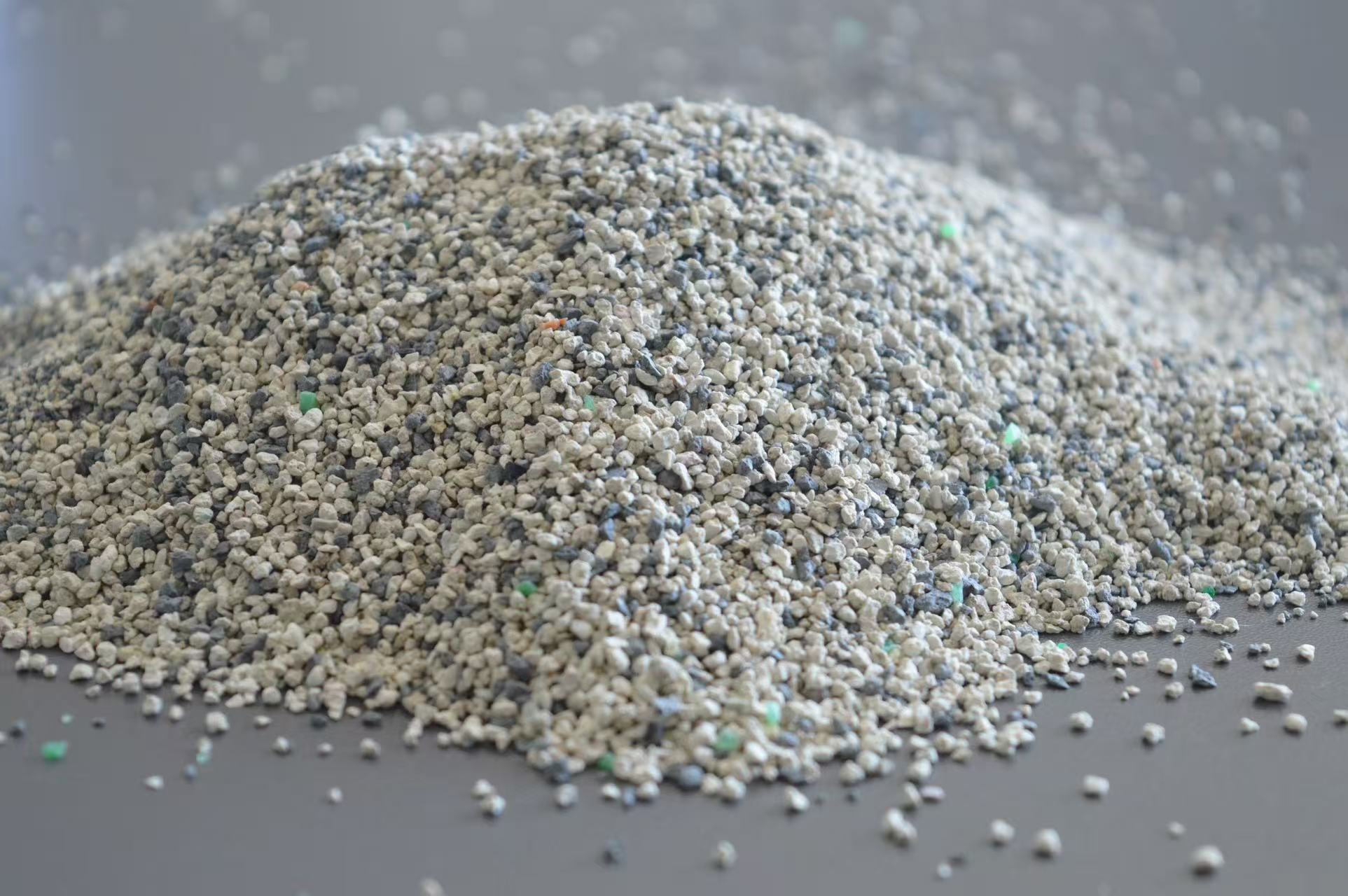
For importers, distributors and private-label buyers, the useful question is not simply what appears on the ingredient list. It is whether the complete litter remains easy to scoop, controls odors under normal use and offers a practical balance of performance, packaging and cost.
What Does 3-in-1 Mean?
In this formulation, 3-in-1 describes three mineral components working together in one litter:
- Bentonite provides the main clumping and liquid-absorption function.
- Coconut-shell activated carbon supports odor adsorption through its porous structure.
- Silica gel granules provide supplementary moisture uptake within the blend.
The term does not mean three times the performance of another litter. It also does not replace the need for regular litter-box cleaning. The value of the formulation depends on how the components are selected, blended and assessed in the finished product.
For a clear product explanation, each component should be linked to a practical function that buyers can understand and evaluate.
1. Bentonite: The Clumping Foundation
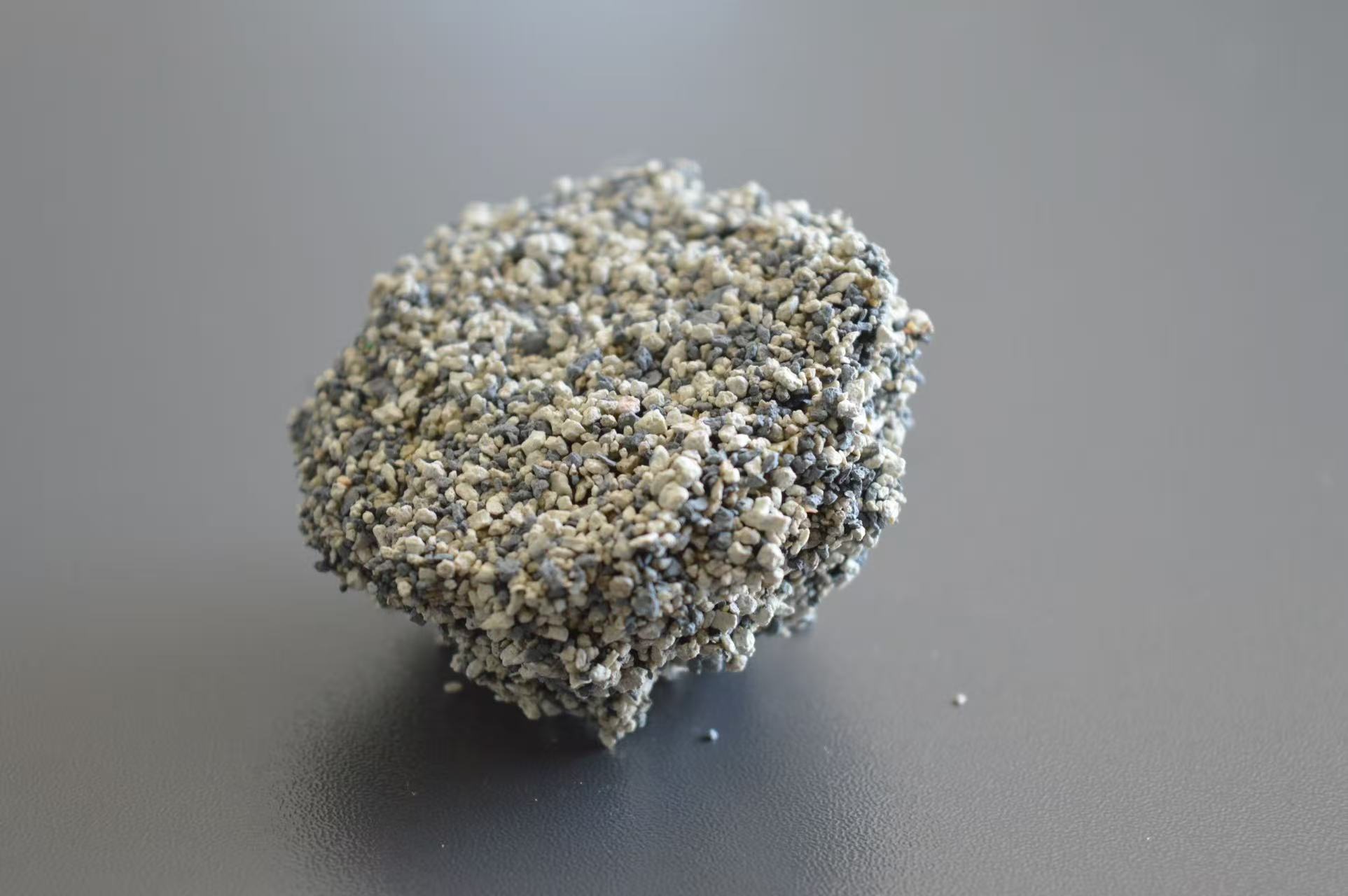
Bentonite provides the main clumping structure. Suitable bentonite absorbs liquid and swells, helping surrounding particles bind into a removable clump. This allows the soiled portion to be scooped out instead of replacing the entire litter tray each time.
In the CELAURA formulation, the white component is selected high-montmorillonite bentonite. Its role is to form the mineral base for liquid uptake and clump development.
When evaluating a sample, look beyond how quickly a visible clump appears. Check whether the clump can be lifted with a scoop, whether it breaks during removal and how much loose litter is removed with it.
A useful clump should be manageable during routine cleaning. Its size, weight and integrity should be considered together. A larger or heavier clump is not automatically better if it removes more unused litter from the tray.
2. Coconut-Shell Activated Carbon: Supporting Odor Control
The dark component is coconut-shell activated carbon. Activated carbon has a porous structure with a large internal surface area. Through adsorption, suitable odor-causing compounds can be retained on that surface.
This function is different from adding fragrance. Fragrance changes the scent of the product, while adsorption is intended to capture certain odor-causing molecules.
The presence of activated carbon alone does not establish a specific odor-removal percentage or a guaranteed number of odor-free days. The finished litter should be assessed under relevant conditions, including repeated use and the intended cleaning routine.
For buyers, the practical question is whether the complete product provides satisfactory odor control under comparable use conditions, not simply whether dark particles are visible in the bag.
3. Silica Gel Granules: Supplementary Moisture Uptake
Silica gel is a porous material that adsorbs moisture within its internal structure. Its moisture uptake varies with environmental conditions, including relative humidity.
Within this three-component formulation, silica gel granules support moisture management alongside the bentonite base. They are not the primary clumping ingredient.
The contribution of silica gel should be assessed as part of the finished blend. Increasing one component does not automatically improve every aspect of litter performance.
A balanced evaluation considers liquid uptake, clump integrity, odor control, dust, handling and overall litter consumption together.
4. Why These Components Are Combined
The formulation assigns different roles to each component. Bentonite provides the clumping foundation, activated carbon supports odor adsorption, and silica gel adds supplementary moisture uptake.
The aim is to combine these functions in a practical scoopable litter rather than relying on fragrance alone as the main product difference.
For distributors and private-label brands, the blend also provides a clear product explanation: three identifiable materials, each included for a defined purpose.
Even so, 3-in-1 should describe the formulation, not imply three separate performance guarantees. Any comparison with another litter should be supported by a defined test using representative finished-product samples.
5. How to Evaluate a 3-in-1 Cat Litter Sample
Start by comparing the candidate product with the litter currently sold in your target market. Use the same tray dimensions, litter depth, liquid volume, waiting time and scooping procedure wherever practical.
The following checklist is a suggested internal screening approach, not a standardized test method.
| Evaluation area | What to check |
|---|---|
| Clump formation | Whether a removable clump develops within the agreed observation period. |
| Clump integrity | Whether the clump remains intact during a consistent scooping procedure. |
| Litter consumption | Clump weight and the amount of loose, unused litter removed with it. |
| Odor performance | Results under comparable use conditions rather than the scent of a freshly opened bag. |
| Dust and handling | Visible dust during controlled pouring and scooping, plus fines in the received sample. |
| Packaging condition | Seal integrity, bag strength, labeling clarity and product condition after transport. |
Repeat the comparison instead of relying on one demonstration. Label samples clearly and record the conditions used.
A water-pour test is useful for preliminary clumping comparisons, but it does not establish odor performance or cat acceptance. Those questions require separate evaluation. Before commercial approval, include a supervised household trial appropriate to the target market. Record ease of cleaning, litter consumption, tracking, odor observations and whether the cats continue using the tray normally.
6. Compare Value Beyond the Price per Bag
For an importing business, purchase price is only one part of the decision. A useful comparison should also include net weight, packaging cost, freight, handling requirements and the amount of usable litter consumed during the evaluation.
Compare products under equivalent conditions rather than judging them only by bag size or appearance. A lower price per bag may not offer lower cost in use if the product requires more frequent replacement or creates more waste during scooping.
For a private-label project, define the intended customer and retail position before finalizing the specification. A supermarket product, an online retail pack and a specialist pet-store range may require different packaging and commercial arrangements.
Ask the supplier to confirm the approved sample reference, finished-product specification, packaging artwork and order conditions before production. This creates a clearer basis for checking future deliveries against the product originally evaluated.
7. CELAURA 3-in-1 Cat Litter and Private-Label Supply
CELAURA 3-in-1 Mineral Clumping Cat Litter is supplied by Hermano for pet product importers, distributors and private-label customers. The current 10 kg product uses crushed, irregular mineral granules.
Packaging and fragrance requirements can be discussed for individual projects. For an initial enquiry, share your destination market, preferred bag size, fragrance preference, expected order quantity and the product you want to benchmark.
This information helps define an appropriate sample evaluation and packaging proposal before commercial terms are finalized.
Everyday Use and Disposal
Odor-control ingredients do not replace regular litter-box maintenance. Scoop waste daily and maintain a consistent cleaning routine. Follow the product filling and replenishment instructions.
Store unused litter in a dry place. Do not flush this mineral-based clumping litter into the toilet. Dispose of used litter according to local household-waste requirements.
This article explains the formulation concept and suggests evaluation criteria. Specific performance claims should be supported by testing of the agreed finished product.
Frequently Asked Questions
Does 3-in-1 mean the litter offers three times the performance?
No. The term describes three functional components in one formulation. Bentonite supports clumping, activated carbon supports odor adsorption and silica gel provides supplementary moisture uptake. It is not a performance multiplier or a guarantee that every result will be three times better.
Which component provides the clumping performance?
Bentonite provides the main clumping structure. It absorbs liquid and swells, helping the surrounding particles bind into a removable clump. Silica gel is included for supplementary moisture uptake, not as the primary clumping ingredient.
Is activated carbon the same as fragrance?
No. Fragrance changes the scent of the product. Activated carbon has a porous structure that can adsorb certain odor-causing compounds. The two functions should not be treated as interchangeable.
Can I judge odor control from the scent of a new bag?
No. A freshly opened bag primarily shows its immediate scent. Odor control should be assessed during repeated use under comparable tray, cleaning, temperature and ventilation conditions.
How should importers compare two cat litter samples?
Use the same tray dimensions, litter depth, liquid volume, waiting time and scooping procedure. Repeat the comparison, record the results and assess clump formation, clump integrity, litter consumption, odor performance, dust and packaging condition.
Is a water-pour test enough for product approval?
No. A water-pour test can provide preliminary clumping information, but it does not establish odor performance, tracking, litter consumption or cat acceptance. A supervised household trial should be included before commercial approval.
Can packaging and fragrance be customized for private label?
Packaging and fragrance requirements can be discussed for individual projects. Share the destination market, bag size, fragrance preference, expected order quantity and benchmark product so the sample and packaging requirements can be defined clearly.
Can used mineral cat litter be flushed into the toilet?
No. CELAURA 3-in-1 is a mineral-based clumping cat litter. Used litter should be disposed of according to local household-waste requirements and should not be flushed into the toilet.
Material Background References
- Imerys - Bentonite for clumping cat litter.
- Jacobi Group - Activated carbon structure, adsorption and applications.
- Clariant - Silica gel moisture adsorption.

