

Clump weight is useful, but it does not show how bentonite cat litter performs during normal daily use. A litter can form a light clump that breaks during scooping, look low-dust in a sample bag and later release fines after shipment, or absorb quickly while tracking heavily outside the tray.
For importers, distributors and private-label pet brands, a reliable purchasing decision should be based on a repeatable quality check and a clear product specification. The evaluation should cover clumping, absorption, dust, particle-size consistency, tracking, odour control and batch-to-batch stability.
This guide sets out seven practical checks for comparing bentonite cat litter samples from different suppliers and for reducing the gap between an approved sample and commercial production.
Why Clump Weight Is Only One Quality Indicator
Many buyers begin with a simple clump-weight test. A measured amount of test liquid is added to a fixed amount of litter, and the resulting clump is weighed after a defined standing time. This can help compare liquid uptake, but it does not answer every performance question.
A lower clump weight does not automatically mean better litter. The more important question is whether the clump remains intact during normal scooping. A light clump that breaks apart, leaves wet residue or drops back into the tray creates more work for the user and can reduce confidence in the product.
Clump weight should therefore be recorded together with clump shape, firmness, surface condition, scoop breakage and the amount of clean litter carried into the clump.
A useful clump should be firm enough to lift without excessive breakage while avoiding unnecessary waste of surrounding clean litter.
Check 1: Clump Integrity During Scoop Testing
Clump integrity is best assessed under controlled conditions. Use the same litter depth, test-liquid volume and type, standing time and scooping method for every sample. If one sample is tested in a deep tray and another in a shallow tray, the comparison is no longer reliable.
Record the following observations:
- Time required for the litter to begin forming a clump.
- Clump shape and surface condition.
- Firmness after a defined standing time.
- Breakage when the clump is lifted or scooped.
- Loose wet material remaining around the clump.
- Residue left at the bottom of the tray.
A good sample should form a removable clump without falling apart in the scoop. It should also avoid taking an excessive amount of surrounding clean litter, because that increases consumption per litter-box cleaning.
Repeat the test more than once. One unusually strong or weak clump may reflect a handling difference rather than normal product performance.
Check 2: Liquid Absorption Speed and Bottom Leakage
Fast absorption can reduce the chance that liquid reaches the bottom of the tray before a stable clump forms. However, absorption speed must be considered together with clump strength. A fast-absorbing litter that produces a fragile clump may still be difficult to use.
During absorption testing, observe:
- How quickly liquid disappears from the surface.
- Whether a wet pool remains around the test area.
- Whether liquid reaches the bottom of the tray.
- Whether litter sticks strongly to the tray base.
- Whether the clump can be removed without leaving wet residue.
Particle-size distribution has a strong influence on this result. A blend containing suitable fine particles may help fill gaps between larger granules and support clump formation. Excessive fines, however, can increase dust and may create overly dense or sticky clumps.
The target is balance, not simply the fastest possible absorption. Buyers should compare absorption speed, clump removal and tray cleanliness as one connected performance area.
Check 3: Dust Before Use and During Scooping
Dust is one of the first quality issues noticed by end users. It affects the appearance of the product, user comfort, household cleanliness and the customer's impression of the brand.
Inspect dust at several stages:
- When the bag is opened.
- When litter is poured into a tray.
- When dry litter is stirred.
- When clumps are scooped.
- When the bottom of the bag is emptied.
Dust is influenced by raw material, crushing method, screening, dedusting, transport vibration and packaging handling. A product may appear low-dust at the factory but create more dust after a long shipment if particle strength and screening are not well controlled.
For private-label projects, test samples in packaging as close as possible to the planned commercial format. This gives a more realistic view of how the product may behave after filling, handling and transport.
Check 4: Particle-Size Distribution and Visual Consistency
Particle size is not only an appearance issue. It influences absorption, clumping, dust, tracking and the consumer's perception of quality. A well-controlled bentonite cat litter should have a reasonably consistent particle distribution with limited oversized pieces and controlled fine content.
Buyers should check:
- Whether the stated granule size matches the actual sample.
- The amount of powder and very fine particles.
- The presence of oversized or hard pieces.
- Colour consistency between granules.
- Whether the product still looks uniform after transport and handling.
Different particle shapes can suit different markets. Crushed bentonite has an irregular appearance and can offer good surface contact for clumping. Ball-shaped litter has a more uniform visual appearance and may be preferred for specific retail positioning.
Neither shape is automatically superior. The right choice depends on target price, desired appearance, dust requirement, packaging concept and local consumer preference.
| Quality check | What to record | Why it matters |
|---|---|---|
| Clump integrity | Firmness, breakage and tray residue | Shows whether the clump can be removed cleanly |
| Absorption | Surface disappearance and bottom leakage | Links liquid uptake with tray cleanliness |
| Dust | Dust during pouring, stirring and scooping | Affects user comfort and product perception |
| Particle size | Actual range, fines and oversized pieces | Influences clumping, tracking and visual consistency |
| Tracking | Granules carried outside the tray | Affects daily household cleanliness |
| Odour control | Unscented base and upgraded formula performance | Separates mineral function from fragrance effect |
| Batch consistency | Sample-to-production variation | Protects repeat orders and private-label quality |
Check 5: Tracking Performance
Tracking occurs when litter sticks to a cat's paws and is carried outside the litter box. It is affected by particle size, particle shape, moisture behaviour and the proportion of fines.
A product with very small granules may provide good coverage and quick clumping, but it may also be more likely to track. Larger particles can reduce tracking in some cases, but may change clump texture and litter-box feel.
Buyers should evaluate tracking as part of the total product positioning:
- Economy products may prioritise cost and basic clumping.
- Mid-range products may seek a balance of clumping, dust and tracking.
- Premium products may use a more refined particle-size profile or functional mineral blend to improve the overall experience.
There is no single particle size that is correct for every market. The right choice depends on the target user, retail price and intended product position.
Check 6: Odour Control Should Be Evaluated Separately from Fragrance
Fragrance can create a pleasant first impression, but it should not be used as the only evidence of odour-control performance. A scented sample may smell fresh when opened while doing little to manage odours after use.
Evaluating an unscented bentonite base separately can provide a clearer view of the natural mineral system. If odour control is a key sales point, request a comparison between the standard bentonite base and any functional upgraded formula.
For example, CELAURA 3-in-1 mineral cat litter can combine high-montmorillonite white bentonite for clumping and liquid absorption, coconut-shell activated carbon for odour adsorption and silica-gel granules for additional moisture absorption and a differentiated appearance.
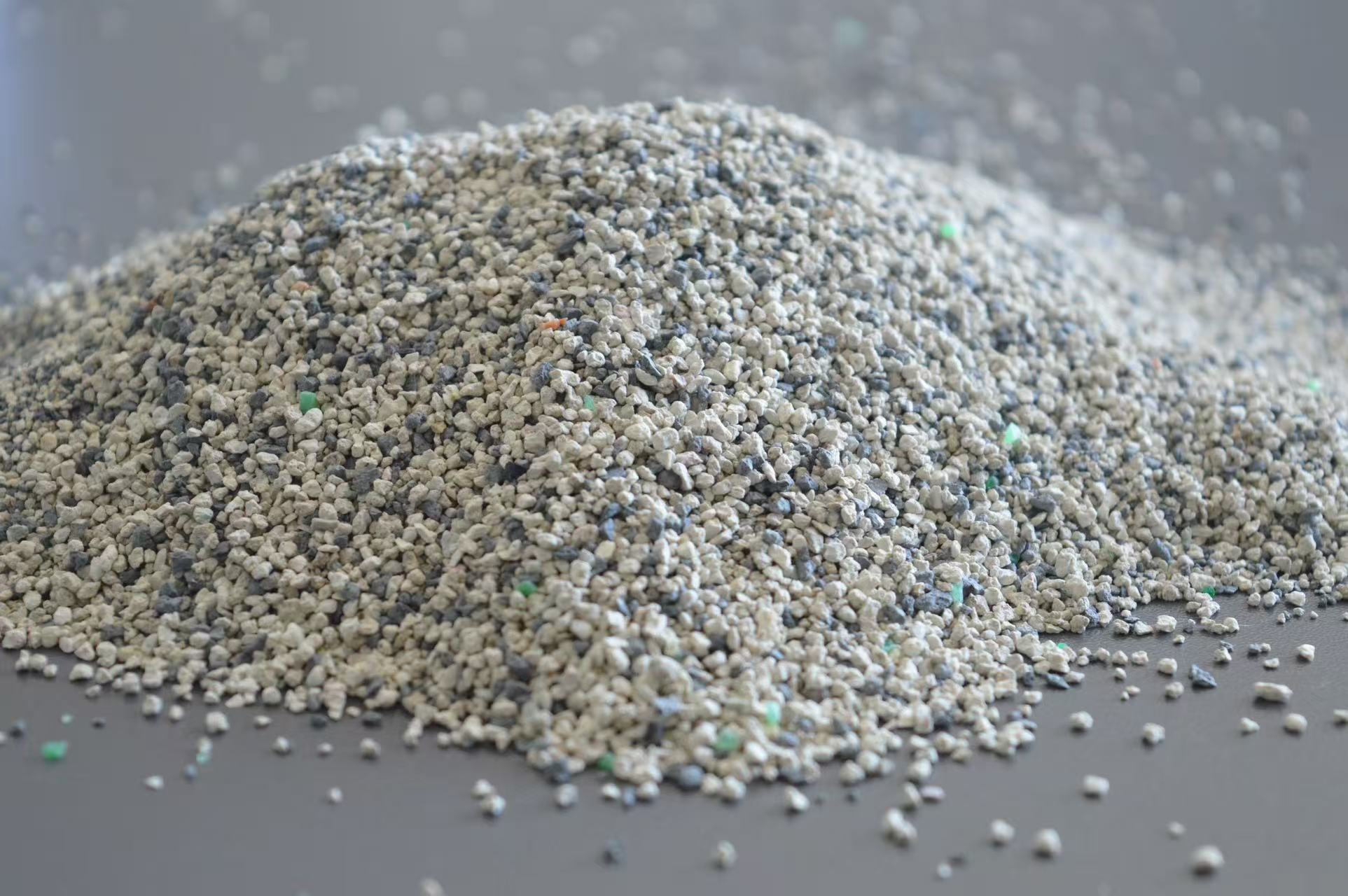
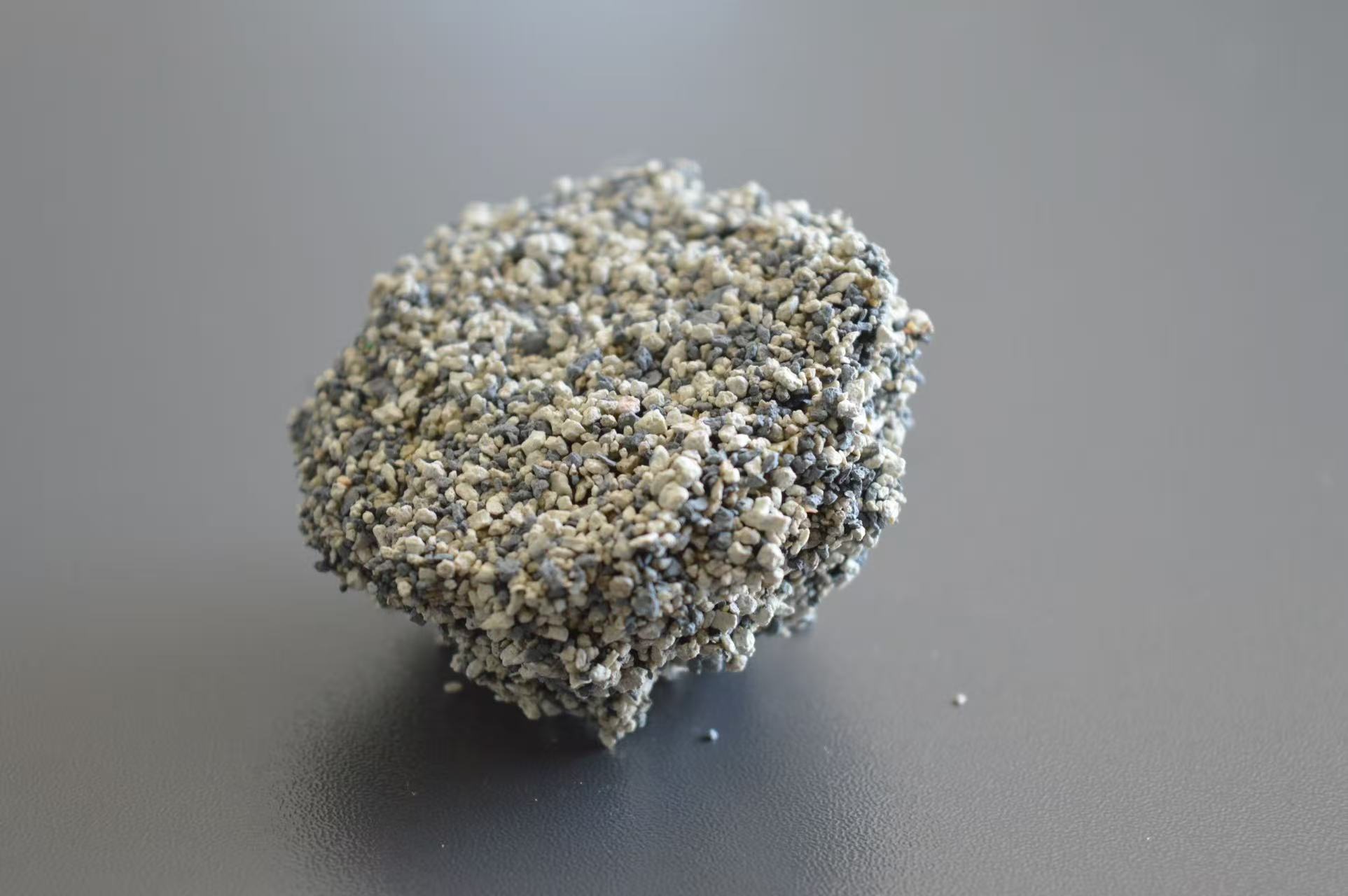
This type of formula is positioned as a functional mineral upgrade rather than ordinary bentonite litter. The visible components also give distributors and private-label brands a clearer product story at retail. However, the performance of activated carbon, silica gel and fragrance should always be evaluated in the final formula.
The ratio of components, granule size and packaging must be matched to the target market and target retail price. You can read more about the individual materials in this guide to 3-in-1 mineral cat litter.
Check 7: Batch Consistency and Supply Reliability
A sample can perform well while later shipments vary in dust level, particle size, colour or clumping behaviour. For a private-label brand, consistency is often more important than achieving one exceptional sample result.
Before placing a commercial order, buyers should discuss the supplier's control of:
- Bentonite raw-material source.
- Particle-size specification.
- Screening and dedusting process.
- Moisture control.
- Fragrance addition, if applicable.
- Activated carbon or silica-gel ratio, for mixed formulas.
- Packaging material and bag weight.
- Production records and quality checks.
- Sample-to-order consistency.
A reliable supplier should be willing to confirm the agreed product configuration before production, including granule type, particle-size range, packaging format, fragrance, printed artwork and inspection standard.
A Simple Buyer Test Protocol
For meaningful comparisons, use the same method for every supplier sample:
- Place the same weight of litter in identical trays at the same depth.
- Use the same measured amount of test liquid for each sample.
- Allow the same standing time before examining the clump.
- Record clump weight, shape, firmness and scoop breakage.
- Check for bottom sticking and wet residue.
- Compare dust during pouring, stirring and scooping.
- Record particle size, visual appearance and fine content.
- Repeat the test more than once before making a sourcing decision.
If possible, also arrange a practical cat-use trial. Laboratory-style tests help compare samples, but real use can reveal differences in odour management, tracking, consumer preference and litter-box cleanliness.
What to Request from a Bentonite Cat Litter Supplier
Before confirming a supplier, buyers should request clear information about:
- Litter type: crushed, ball-shaped or mixed mineral formula.
- Particle-size range.
- Dust-control process.
- Clumping and absorption test method.
- Moisture level.
- Fragrance options.
- Activated carbon or silica-gel content, where applicable.
- Packaging options and bag material.
- Private-label printing requirements.
- Minimum order quantity.
- Production lead time.
- Container loading plan.
- Sample policy and commercial quality standard.
A clear written specification helps avoid misunderstandings between the approved sample and the delivered cargo. Review the standard bentonite cat litter page or contact Hermano with your target market, preferred litter type, packaging plan and required quality checks.
The best bentonite cat litter is not defined by one number. Strong product performance comes from the balance of clump integrity, absorption, dust control, particle-size design, tracking behaviour, odour management and production consistency.
Frequently Asked Questions
Is clump weight enough to evaluate bentonite cat litter?
No. Clump weight can help compare liquid uptake, but it does not show whether the clump stays intact during scooping, leaves wet residue or uses an excessive amount of clean litter. Record clump firmness, shape, breakage and tray residue alongside weight.
What is the best way to compare clumping performance?
Use the same litter depth, test-liquid volume and type, standing time and scooping method for every sample. Repeat the test more than once and compare clump weight, firmness, breakage, wet residue and the amount of surrounding clean litter removed.
Why can a light clump still perform poorly?
Clump weight only measures the mass of the collected material. It does not show whether the clump remains intact, leaves wet material in the tray or carries an excessive amount of clean litter. Those observations should be recorded separately.
How should dust be tested in a cat litter sample?
Check dust when opening the bag, pouring litter into a tray, stirring dry litter, scooping clumps and emptying the bottom of the bag. Test commercial-style packaging where possible, because transport and handling can change the amount of fines released.
Does smaller particle size always mean better cat litter?
No. Smaller particles may support coverage and clump formation, but they can also increase dust and tracking. Larger particles may reduce tracking in some cases but change texture and clump behaviour. The right particle-size profile depends on the target market and product position.
How should odour control be evaluated separately from fragrance?
Fragrance affects the initial smell but is not the same as odour-control performance. Evaluate an unscented bentonite base separately, then compare any upgraded formula under the same conditions. The final ratio, particle size and packaging should also be tested.
What does batch consistency mean for cat litter sourcing?
Batch consistency means that commercial shipments remain close to the approved sample in particle size, dust level, colour, moisture, clumping behaviour and formula composition. Agree the specification and inspection standard before production, especially for private-label orders.
What information should importers provide before requesting samples?
Provide the target market, litter type, preferred particle-size range, fragrance direction, packaging format, expected retail position, required quality checks and any private-label requirements. This helps the supplier select a relevant sample and discuss the production specification clearly.
Technical References
- International Cat Care - cat health, welfare and litter-tray guidance.
- Cornell Feline Health Center - feline health and litter-box resources.
- American Veterinary Medical Association - pet-owner and animal-health information.
- The Clay Minerals Society - clay mineralogy and bentonite-related technical resources.
- U.S. Geological Survey - mineral commodity and geological information.
These references provide general background. They do not constitute certification, endorsement or performance evidence for a Hermano product.

