

From Mineral Resource to a Bentonite Grade That Fits the Work
Bentonite begins underground, but its industrial value is decided much later: in a coating formulation, a drilling fluid, a ceramic body, a foundry sand system or a finished cat litter product.
A mineral that develops viscosity in water may not disperse in oil. A clay suitable for one application may need a different processing route before it can serve another. For a bentonite supplier, this means that resource access is only one part of the technical story.
HERMANO GROUP’s bentonite business, represented by HERMANO NEW MATERIALS (DALIAN) CO., LTD., connects mineral resources, processing and application development. The useful question for a buyer is not simply what mineral is available, but how that mineral is understood, converted into a defined grade and verified in the intended system.
Understand the resource
Mineral composition, exchangeable cations and natural variability set the starting point.
Control the processing
Grinding, classification, activation and modification shape the grade that reaches the customer.
Verify the application
Performance is confirmed in the customer’s formulation, operating conditions and test method.
Start with the Resource, but Do Not Treat It as a Finished Specification
HERMANO GROUP’s own bentonite resources in Liaoning, China, support raw-material selection and supply planning. The company’s public information also describes control over mining and processing activities.
That integration matters because a natural deposit should not be treated as uniform throughout. Mineral composition, associated minerals, exchangeable ions and weathering can all influence how a material behaves during processing and use.
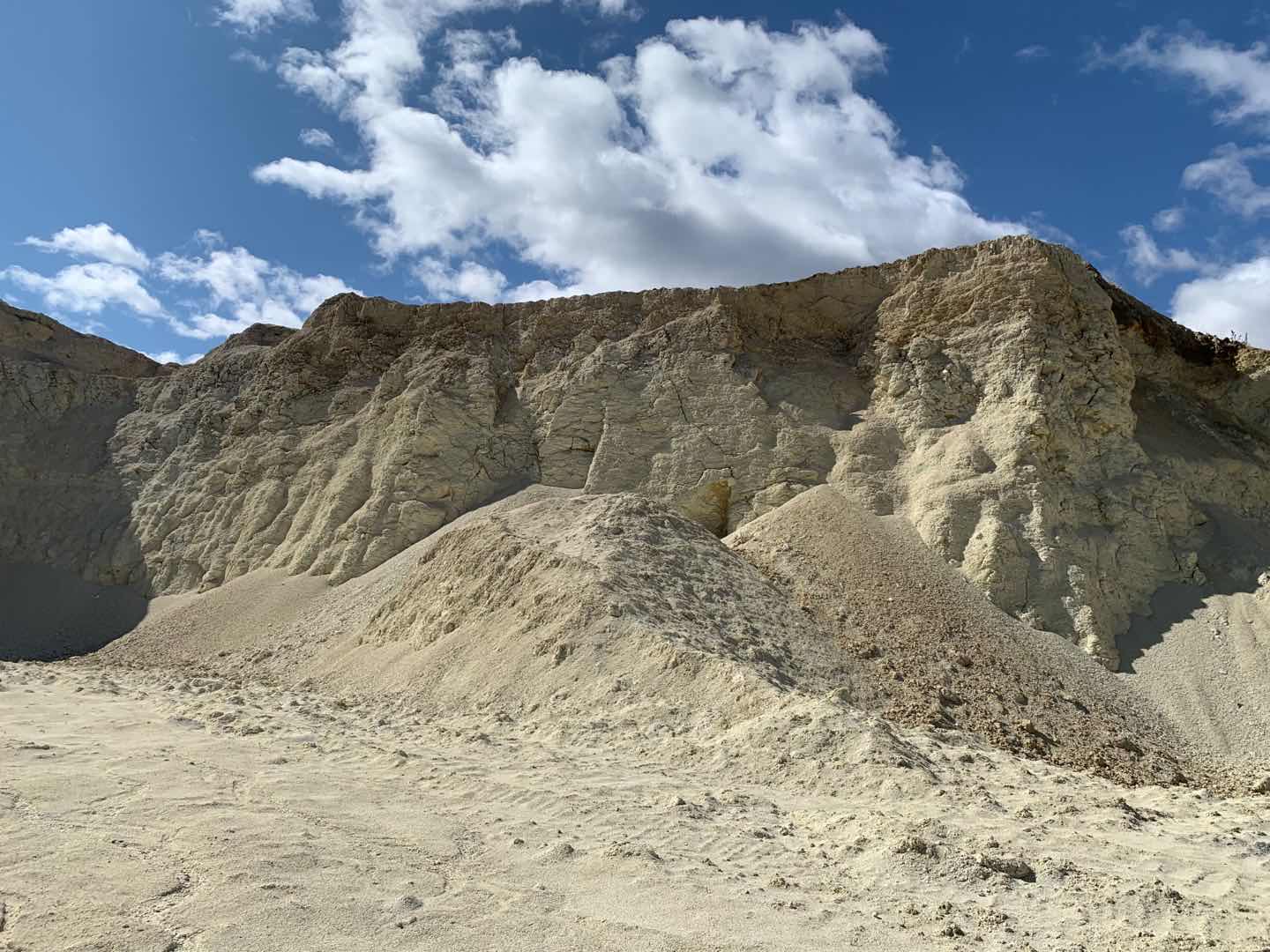
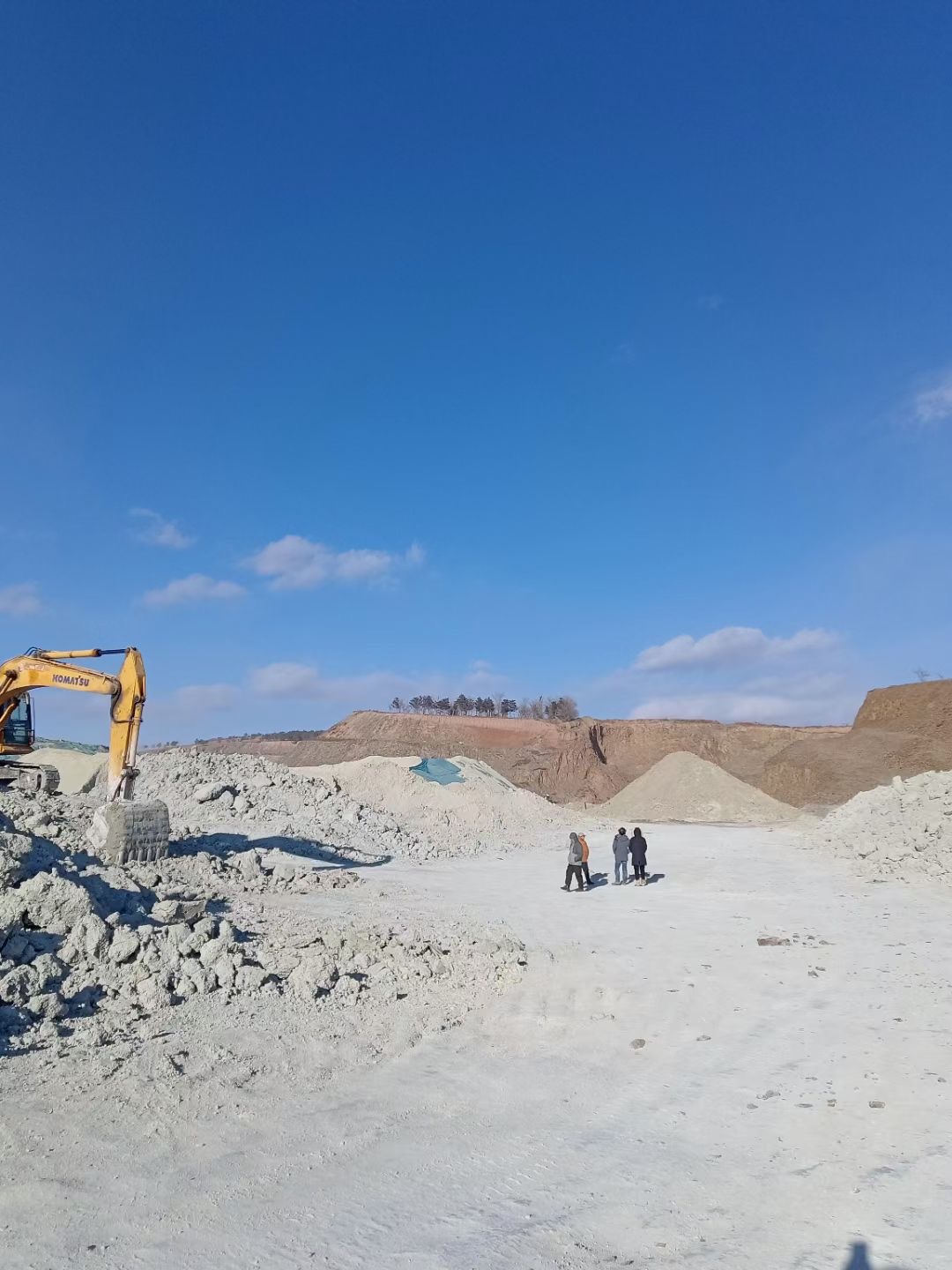
For an integrated producer, the task is to understand that variability and select material accordingly. Mine ownership can provide access and control. Representative testing and disciplined processing are what turn those advantages into a consistent product direction.
Buyer takeaway: resource access is useful, but it is not a substitute for grade definition, batch documentation or application testing.
Know the Mineral Before Choosing the Process
Montmorillonite is a principal functional mineral in many bentonites. Its layered structure and exchangeable cations contribute to hydration, swelling and ion-exchange behavior.
Before a processing route is selected, several technical questions help separate one raw material from another. The answers also show why a single headline value is rarely enough to describe suitability.
| Technical question | Why it matters |
|---|---|
| What clay minerals are present? | Establishes the mineral foundation for processing and grade selection. |
| What is the exchangeable-cation composition? | Helps explain hydration and how the material may respond to activation. |
| How much hard or non-swelling material is present? | Informs raw-material cleanliness and the processing steps that may be needed. |
| How does the material hydrate and disperse? | Connects mineral characteristics with practical mixing behavior. |
| How does the finished grade perform in the intended system? | Determines whether the product is suitable for the customer’s application. |
These questions form an evaluation framework. The particular tests and acceptance limits still depend on the application. A grade for a bentonite application should be assessed against the conditions in which it will be used.
Processing Turns Mineral Potential into a Repeatable Grade
Raw bentonite and an application-ready grade are different stages of the same material. Crushing, drying, grinding, classification, activation and modification can change how a selected mineral behaves in use. Each operation should serve a defined purpose.
Particle size and distribution
Grinding and classification influence dispersion, mixing behavior and the balance between fine and coarse material.
Sodium activation
Controlled activation can improve the swelling behavior of suitable calcium-rich bentonite, but it does not make every starting material equivalent.
Organophilic modification
Surface modification addresses a different need: compatibility with suitable organic media, such as certain solvent-based coating systems.
Batch discipline
The processing route matters only when it can be repeated from one production batch to the next.
For HERMANO, the connection between mineral sourcing and application-specific processing is central to its technical positioning. The company’s published portfolio includes natural bentonite, sodium bentonite and organophilic bentonite across several industrial fields.
Application Development Requires More Than a Single Parameter
Bentonite selection becomes more useful when the customer’s operating conditions are understood. A viscosity figure, for example, needs a defined concentration, preparation method, temperature, instrument and measurement conditions.
Even a reproducible laboratory result must be interpreted in relation to the complete formulation. The aim is not to collect more numbers for their own sake, but to understand which result connects to the customer’s actual problem.
For water-based coatings, practical evaluation may include viscosity development, pigment settling, storage stability, redispersibility and application behavior. For a solvent-based coating system, the first question may instead be compatibility with the resin, solvent blend and dispersion process.
Useful starting information: the application, current formulation or process, existing material, target performance, operating conditions and the specific issue that needs to be solved.
Different Applications Need Different Evidence
HERMANO’s bentonite portfolio spans coatings, lubricating grease, agrochemical formulations, drilling fluids, civil engineering, foundry, ceramics and cat litter. These markets use related mineral properties, but their performance requirements are not interchangeable.
Does the grade disperse effectively, control rheology and support pigment suspension without impairing application?
Is the organoclay compatible with the resin, solvent blend and dispersion process?
Does the selected grade develop the required consistency and maintain acceptable oil retention and mechanical stability?
Does it support suspension and redispersibility while remaining compatible with the active ingredient and other formulation ingredients?
How does it perform in the actual make-up water, additive package and drilling conditions? See the drilling fluid bentonite range.
Does the material meet the project’s slurry, sealing or permeability requirements under relevant conditions? Review civil engineering bentonite for this application area.
Does it provide the required bonding behavior in the sand system, or support forming, drying and fired appearance in the ceramic body?
Does it deliver scoopable clumps, acceptable dust, economical consumption and clean tray release in the finished product? Learn about bentonite cat litter.
These are evaluation priorities, not interchangeable product guarantees. A grade should be assessed for its intended use and supported by testing that reflects the customer’s process.
One Grade Example: GS-6TT640(FH) for Water-Based Coatings
HERMANO’s GS-6TT640(FH) illustrates why precise product positioning matters. The company identifies this grade as an inorganic bentonite for water-based paints and coatings, with rheology control and pigment suspension as its application focus.
It is distinct from organophilic bentonite and is intended for evaluation in a complete coating formulation. Dosage and performance depend on factors such as pigment type, binder, solids content, pH and processing conditions.
This specificity makes a technical discussion more productive. It connects a named grade with a defined formulation environment and makes clear what the customer needs to verify. For a broader comparison, read inorganic bentonite vs organoclay for paints and coatings.
Reliability Depends on Repeatable Supply and Clear Evidence
A successful sample is an important development milestone. Commercial reliability also requires subsequent production to reproduce the agreed performance. For buyers, useful evidence includes representative samples, clearly identified grades, agreed test procedures and documentation linked to the relevant product or batch.
Describes the grade, its reference properties and the technical basis for evaluation.
Reports specified results for a production batch and should be linked to that batch.
Supports handling, storage and safety assessment for the selected material.
Shows how the material behaves in the customer’s formulation, equipment and operating conditions.
These documents serve different purposes and should be interpreted accordingly. Together, they provide a stronger basis for cooperation than an isolated headline specification.
The Integrated View: Resource, Process and Application
HERMANO GROUP’s technical proposition rests on the relationship between its mineral resources, processing activities and range of application-specific products.
Its own mineral resources provide a starting point for selection and traceability. Processing develops suitable grades from that foundation. Customer evaluation then determines how those grades perform in a particular formulation or operating environment.
For industrial buyers, the value of this integrated approach is the opportunity to investigate performance from its source: the mineral, the process and the application.
Discuss a Bentonite Grade for Your Application
Share your application, current material, formulation or process details and the performance issue you need to address. Hermano can discuss a suitable grade direction, supporting documents and an evaluation sample for qualified projects.
Contact Hermano to request TDS, COA, SDS or an evaluation sample.
Frequently Asked Questions
What does connecting mineral resources with application development mean at Hermano?
It means the starting mineral, processing route and intended application are considered together. Resource access supports raw-material selection. Processing helps produce a defined grade. Customer trials then show whether that grade is suitable for the formulation, process or operating environment.
Why does owning a bentonite resource matter to a buyer?
A controlled resource can support raw-material selection, supply planning and traceability. It does not replace product testing or quality control. Buyers should still confirm the grade specification, batch documentation and performance in their own application.
Can one bentonite grade serve every application?
No. Bentonite behavior depends on mineral composition, exchangeable cations, processing and the system in which it is used. A grade suitable for one application may not be suitable for another, so selection should follow the intended use.
How can processing change bentonite performance?
Crushing, drying, grinding, classification, activation and modification can change particle size, dispersion, swelling behavior or compatibility. The correct processing route depends on both the starting mineral and the performance required by the customer.
What information should a customer provide before grade selection?
Useful information includes the application, formulation or process, current material, target performance, operating conditions and any known problem such as settling, low viscosity or unstable suspension. A representative sample and test method also help make the discussion specific.
How should an evaluation sample be tested?
The sample should be tested in a representative formulation or process using agreed methods. Record the preparation procedure, addition level, test conditions and reference material. A successful laboratory result should be followed by production-scale verification when appropriate.
Which documents can support a technical review?
A technical data sheet describes the grade, a certificate of analysis reports batch-specific results, and a safety data sheet supports handling and safety assessment. An application trial shows how the material behaves in the customer's system. The relevance and availability of each document should be confirmed for the selected grade.
Can Hermano support customized grades or private-label needs?
Hermano can discuss application-specific bentonite and organophilic clay grades, processing options and packaging requirements. The suitable route depends on the starting material, target performance, order volume and technical review. Specifications should be agreed before commercial supply.

