

In ceramic slip casting, a small addition of bentonite can have a disproportionate effect on suspension, green strength and production stability.
Bentonite may improve particle suspension and the handling strength of the cast body. An unsuitable grade or addition level can also increase water demand, disturb deflocculation, slow casting, raise shrinkage or contribute to drying defects.
This article explains how ceramic manufacturers can evaluate bentonite more systematically, with the aim of improving green strength without losing control of slip rheology.
How Bentonite Can Improve Green Strength Without Losing Rheology Control
A stable casting slip must do more than flow through a pipeline. It needs to remain homogeneous during storage, fill the mould consistently, release water at a predictable rate, build a uniform cast layer and form a green body strong enough for demoulding and handling.
This requires a balance between several properties:
- Low enough viscosity during mixing and pumping.
- Controlled yield stress to reduce particle settling.
- Predictable thixotropic recovery after shear.
- Stable density and solids loading.
- Consistent casting rate and mould release.
- Sufficient green strength after demoulding.
- Controlled drying shrinkage and low cracking risk.
- Consistent fired colour and fired properties.
Bentonite can support several of these requirements because its fine plate-like particles interact strongly with water and other mineral particles. The same activity also makes the grade sensitive to over-addition, poor dispersion and changes in the deflocculant system.
A grade that provides excellent suspension may be too active for a highly deflocculated slip. A grade that improves green strength may also raise drying shrinkage when too much is used. The objective is not to maximize bentonite activity. It is to create the most stable processing window.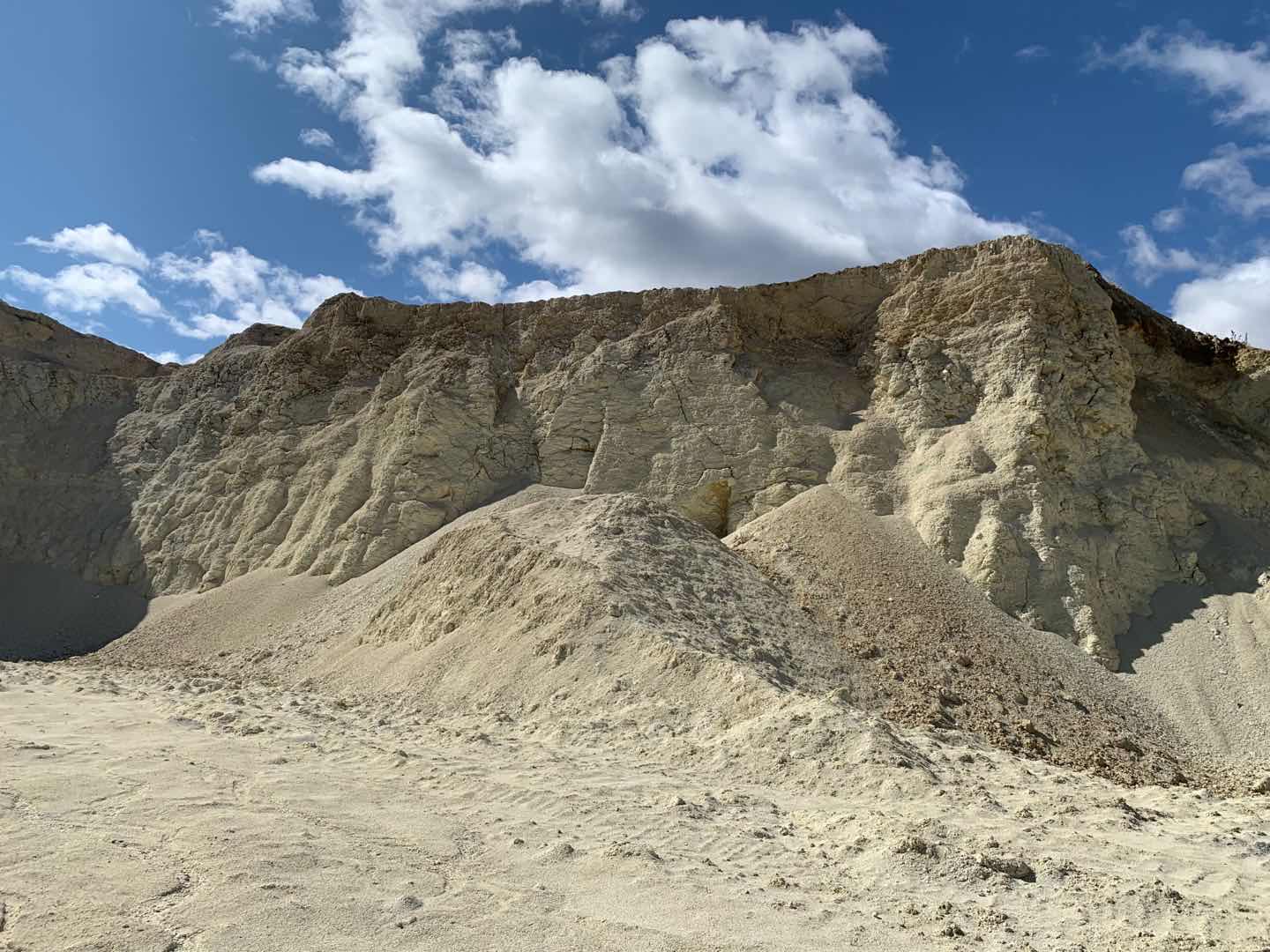
Why Slip Performance Is More Than a Viscosity Number
A single viscosity reading cannot show whether a slip will remain stable during storage, cast at the required rate or produce a body with sufficient handling strength. It also does not show how quickly the structure recovers after mixing or pumping.
A slip with high apparent viscosity may still settle, form hard sediment or perform poorly if its particle structure is unstable or difficult to break down during processing. Viscosity should therefore be considered together with yield stress, thixotropy, density, casting rate and the condition of the cast body.
A higher viscosity is not automatically better. The useful target is a stable rheology profile that supports suspension and casting without creating excessive water demand or processing resistance.
What Bentonite Does in a Ceramic Casting Slip
In a ceramic body, bentonite can contribute in four main ways. The importance of each function depends on the body composition, forming method and finished-product requirements.
1. Improving particle suspension
Fine bentonite particles can help maintain a more uniform distribution of clay, feldspar, silica and other body components. This can reduce hard settling during storage and improve consistency between casting batches.
Suspension should not be confused with simply making the slip thicker. A high-viscosity slip may still perform poorly if its structure is unstable or difficult to break down during mixing.
2. Supporting green strength
After water is removed by the mould and the body begins to dry, bentonite can improve bonding between mineral particles. This may increase the green strength of the cast piece and reduce breakage during demoulding, trimming and transfer.
For thin-wall sanitaryware, tableware and complex cast shapes, this can be particularly important. Green strength should still be assessed together with drying behaviour. A body that becomes stronger but cracks more easily is not an improvement.
3. Influencing rheology and thixotropy
Bentonite affects how the slip behaves at rest and under shear. In practical terms, it can influence:
- Flow during mixing and pumping.
- Recovery after agitation.
- Resistance to sedimentation.
- Stability during storage.
- Surface quality after casting.
The desired rheology differs between pressure casting, traditional plaster mould casting, sanitaryware production and small-batch technical ceramics. There is no universal bentonite viscosity value that suits every process.
4. Affecting water demand and shrinkage
Because bentonite has a high surface area and strong water interaction, it may increase the amount of water required to achieve a given flow condition. This can reduce solids loading and increase drying shrinkage when the addition is not properly controlled.
In ceramic processing, additional water is rarely a free benefit. It can affect drying time, energy consumption, casting rate and defect risk. The selected bentonite should work with the deflocculant system rather than force the formulation to use more water.
Five Properties to Evaluate Before Choosing Bentonite
1. Mineral composition and montmorillonite content
Montmorillonite is the active clay mineral responsible for much of bentonite's swelling and rheological behaviour. Higher activity is not automatically better. Ceramic formulators need activity that is consistent and compatible with the rest of the body.
A highly active bentonite may be useful where stronger suspension or green strength is required. A more moderate grade may be easier to control in a highly deflocculated, high-solids slip.
2. Particle-size distribution
Particle size affects dispersion rate, water demand, surface finish and rheology. Very fine material may react quickly but can make the slip more sensitive to mixing conditions and electrolyte balance.
A suitable particle-size distribution should be evaluated in the actual ceramic formulation, not only by dry sieve data. The practical question is whether the bentonite disperses uniformly without creating local gel particles, inconsistent viscosity or surface defects.
3. Soluble salts and electrolyte sensitivity
Ceramic slips are sensitive to sodium ions, calcium ions, pH and the selected dispersant. Small changes in soluble salts can shift the deflocculation curve and change viscosity significantly.
A new bentonite should not be evaluated only by adding it to an established slip at the previous dispersant dosage. Deflocculant demand must be re-optimized after any change in clay grade.
4. Colour-related impurities
For white ceramic bodies, engobes and light-coloured glazes, raw whiteness alone is not enough. Iron-bearing and titanium-bearing minerals, dark accessory minerals and variation between production lots can influence fired appearance.
A visually white raw bentonite may still affect fired colour differently depending on firing temperature and atmosphere. Ceramic producers should assess fired test bars or fired body samples, not only raw powder colour.
5. Moisture and batch consistency
Moisture variation changes dosing accuracy. Batch-to-batch variation in mineralogy, particle size or soluble salts can also make a previously stable formulation difficult to control.
For industrial ceramic production, consistency is often more valuable than extreme laboratory activity. A reliable supplier should be able to provide stable technical parameters and support evaluation in the customer's actual body system.
A Structured Trial for Ceramic Manufacturers
A structured trial is more useful than a simple pass-or-fail sample test. The goal is to understand how a candidate grade changes the complete casting process and where the useful addition range begins and ends.
Step 1: Establish the baseline body
Record the existing formulation and operating conditions before changing the bentonite grade:
- Raw material composition.
- Solids loading and density.
- Water addition.
- Deflocculant type and dosage.
- Mixing time and mixing energy.
- Slip viscosity under defined conditions.
- Casting rate and demoulding time.
- Green strength, drying shrinkage and fired appearance.
Without this baseline, it is difficult to identify whether a performance change comes from the bentonite, mixing conditions or variation in another raw material.
Step 2: Screen bentonite at controlled increments
Evaluate the bentonite at several controlled addition levels rather than selecting one dosage immediately. Observe how the grade changes suspension, deflocculant demand, flow, casting behaviour and green strength.
Do not compensate for an unsuitable bentonite by simply adding more water. Review dispersion and deflocculant optimization first.
Step 3: Re-optimize the deflocculant package
Bentonite can alter the electrochemical balance of the slip, so the original dispersant dosage may no longer be optimal. A proper comparison should include a deflocculant curve for each bentonite grade.
The ceramic team should identify the dosage range where the slip reaches the desired flow and stability without over-deflocculation or rapid viscosity drift.
Step 4: Test after ageing, not only after mixing
A slip may look acceptable immediately after preparation but become unstable after storage. Evaluate at defined intervals, such as after mixing, after standing and after controlled re-agitation.
Important observations include viscosity change over time, sedimentation or hard-pack formation, ease of remixing, foam behaviour, casting-rate consistency and surface quality of the cast part.
A bentonite candidate should be judged on the complete process result: deflocculant demand, slip stability, casting rate, green strength, drying behaviour and fired appearance.
Common Ceramic Slip Problems and First Checks
The table below lists common production symptoms and the first areas to investigate. These are screening directions, not a substitute for evaluation in the actual body system.
| Production symptom | Possible bentonite-related cause | First point to check |
|---|---|---|
| Slip becomes too thick or requires more water | Bentonite is too active, too fine, poorly dispersed or incompatible with the dispersant | Re-optimize dispersant dosage and mixing sequence |
| Viscosity rises during storage | Soluble salts, pH shift or insufficient dispersion | Check ageing behaviour, conductivity, pH and the deflocculant curve |
| Poor green strength after demoulding | Bentonite addition is too low, the grade has insufficient binding contribution or the body is not balanced | Compare green strength with drying shrinkage and casting rate |
| Cracks during drying | Excessive bentonite activity, high water demand or non-uniform drying | Review addition level, moisture profile and drying conditions |
| Slow or inconsistent casting | Slip rheology is not balanced, solids loading is too low or deflocculation is unstable | Review density, viscosity curve and mould condition |
| Fired colour variation | Iron-bearing or titanium-bearing impurities and lot-to-lot mineral variation | Evaluate fired test pieces, not only raw powder whiteness |
Body, Engobe and Glaze Need Different Priorities
The same bentonite should not automatically be used in every ceramic layer. The required balance changes with the function of the system.
| Ceramic system | Main selection focus |
|---|---|
| Body | Suspension, plastic bonding, casting behaviour, green strength and drying control |
| Engobe | Rheology, coating uniformity, adhesion between body and glaze, drying compatibility and colour control |
| Glaze slurry | Suspension, application behaviour, settling resistance, thickness control and fired surface quality |
A grade that performs well in one system may not be appropriate in another. Application-based selection is more reliable than purchasing bentonite under a general ceramic grade description.
What to Include in a Ceramic Bentonite Sample Enquiry
A useful sample discussion should begin with the formulation and process conditions, not only a request for a viscosity specification. The following information helps narrow the grade selection:
- Ceramic application and forming method.
- Body composition and current bentonite dosage.
- Solids loading, density and water addition.
- Deflocculant type, dosage and mixing procedure.
- Target casting rate, demoulding time and green strength.
- Drying conditions and current defect concerns.
- Firing temperature, atmosphere and target colour.
- Current performance problem and proposed evaluation criteria.
For a direct material discussion, review the bentonite product collection or contact Hermano with your body formulation and current slip parameters.
The objective is to evaluate a grade that supports green strength and suspension while maintaining a controllable casting window. Final suitability depends on repeatable results in the customer's actual ceramic system.
Frequently Asked Questions
Can bentonite improve green strength without affecting slip rheology?
Bentonite can improve green strength, but it also affects suspension, water demand and flow. The addition level and deflocculant system should be optimized together so the slip remains stable and castable. Green strength should be evaluated alongside casting rate and drying behaviour.
Why can a small bentonite addition change slip viscosity so much?
Bentonite has a high surface area and interacts strongly with water and other mineral particles. Its plate-like particles can form a structure at low addition levels, so small changes in grade, dosage, soluble salts or dispersion can produce a large rheological effect.
What is the right bentonite dosage for ceramic slip casting?
There is no universal dosage. The useful range depends on the body composition, bentonite activity, solids loading, deflocculant package, forming method and target green strength. Screening at several controlled increments is more reliable than applying one standard addition rate.
Should the deflocculant be re-optimized after changing bentonite?
Yes. A new bentonite can change the electrochemical balance and dispersant demand of the slip. The original deflocculant dosage may no longer be optimal. A deflocculant curve should be established for each candidate grade.
Why should ceramic slip be tested after ageing?
A slip can appear acceptable immediately after mixing but change during storage. Ageing tests can reveal viscosity drift, sedimentation, hard-pack formation, difficult remixing and changes in casting performance. The results should be compared at defined intervals and after controlled re-agitation.
Does higher montmorillonite content always mean better performance?
No. Higher activity can improve suspension or green strength, but it may also increase water demand, sensitivity to deflocculation and drying shrinkage. The best grade provides consistent performance in the actual ceramic body rather than the highest activity value.
Is raw whiteness enough to judge bentonite for white ceramics?
No. Raw powder whiteness does not fully show how iron-bearing, titanium-bearing or other accessory minerals will affect fired colour. Fired test pieces should be assessed under the intended firing temperature and atmosphere.
Can the same bentonite be used in body, engobe and glaze?
Not automatically. Body, engobe and glaze systems have different requirements for suspension, rheology, adhesion, drying and fired appearance. A grade that performs well in one layer may not be suitable for another.
Technical References
- The American Ceramic Society - ceramic processing, casting and materials information.
- The Clay Minerals Society - clay mineralogy and montmorillonite-related technical resources.
- Imerys - bentonite mineral properties and industrial applications.
- ASTM International - standardized test methods for ceramic and mineral materials.
- ISO - international standards for fine ceramics and material testing.
- The European Ceramic Society - ceramic science and processing resources.
These references provide general technical background. They do not constitute certification, endorsement or performance evidence for a Hermano product.

